Can Someone Stay With You During a Sleep Study?
Key Takeaways
Most adults sleep alone during an overnight sleep study, but each sleep center sets its own rule, so call ahead.
- The usual rule: adults stay alone in a private room.
- Common exceptions: children, and adults who need a caregiver.
- Policies vary: one center allows a spouse, another allows nobody.
- Always allowed: a ride there, a ride home and comfort items from home.
You’ve got a bed in a strange room and wires on your head. Of course you want someone nearby.
Here’s what sleep centers usually say. This is educational and doesn’t replace guidance from your doctor or sleep center.
The Short Answer
Usually no. Cleveland Clinic says adults generally sleep alone, while children or people with special needs may have a caregiver or loved one stay, often in another room.
The reasoning is practical. A second person adds noise, movement and snoring that can blur your recording, and rooms are limited.
Three Real Centers, Three Real Answers
| Sleep Center | Adult Policy |
|---|---|
| Richmond University Medical Center | No overnight visitors for adult patients, but a parent or guardian can stay with a patient under 18 |
| UF Health Sleep Center | Allows one caretaker, an adult guest or a spouse |
| Banner Health | Family can drop you off and pick you up, but only the patient stays overnight |
These come from each center’s public pages, so they show the range and not your center’s rules. Your paperwork or one phone call will give you the real answer.
Sources are Richmond University Medical Center, UF Health and Banner Health.
Six Questions for the Scheduler
- Can anyone stay overnight, and in which room?
- Is there an exception for caregivers?
- What time do I arrive, and when am I done?
- Where can my ride park or wait?
- Which comfort items are allowed?
- What happens if I can’t sleep?
Also mention skin allergies. Cleveland Clinic says sensor adhesives can irritate some people’s skin.
Settling In Alone
Bring your own pillow, a blanket and slippers if the center allows them. Familiar things make a strange room feel smaller.
Keep your evening routine, but skip naps, caffeine and alcohol. Cleveland Clinic suggests avoiding caffeine and alcohol for at least eight hours beforehand.
Ask the technologist to explain each sensor. Knowing what’s stuck to you takes away a lot of the mystery.
What You Only Need to Pull Off
A study is generally valid if you get at least two hours of sleep. Staff don’t usually watch you all night, because the video and audio matter mainly when a reading looks odd.
You can use the bathroom, and staff will tell you whether you need help with the wires.
What to Pack
- Pajamas with a separate top and bottom
- Clothes for the next day
- Your medicines and a list of them
- Your CPAP and masks, if you have them
- Photo ID, insurance cards and any paperwork
Leave jewelry, valuables and wigs at home. Cleveland Clinic also suggests makeup remover if you wear makeup.
Would Home Be Easier?
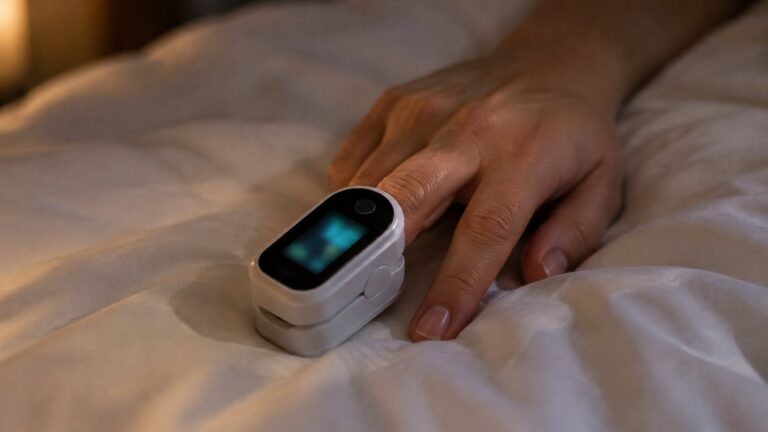
Some people qualify for a home sleep apnea test, a small device worn in your own bed. Your doctor decides, and who qualifies for one depends on your symptoms.
Get the full night-by-night picture in what happens during an overnight sleep study. If your test finds sleep apnea, what CPAP therapy is like in the first month is a good read.
Sleep Study Companion Questions
Your Next Step: One Phone Call
Call your sleep center and ask about its overnight policy.
Ten minutes on the phone beats a surprise at check-in.