Buteyko Breathing at Night: A Snorer’s Introduction
You know the sound of your own house at 3 a.m. The refrigerator hums, the furnace ticks, and somebody down the hall saws through a log.
Some couples also wonder about tape over the lips, so we put together a partner guide to mouth tape and snoring.
Maybe somebody told you to breathe less. That odd little instruction has a name, and the name is Buteyko.
What Is Buteyko Breathing, Anyway?
Konstantin Buteyko, a Ukrainian physiologist, began developing his method during the 1950s under the Soviet system. He decided most of us breathe too much, and that the extra air drains carbon dioxide from the blood.
From that idea he built a practice around nose breathing, smaller breaths, and relaxation. His followers say it helps around 150 conditions, which is a big promise for a breathing exercise.
Why Some People Swear by It
Teachers compare learning the method to learning to ride a bicycle. You practice at first, then need fewer exercises as your control improves.
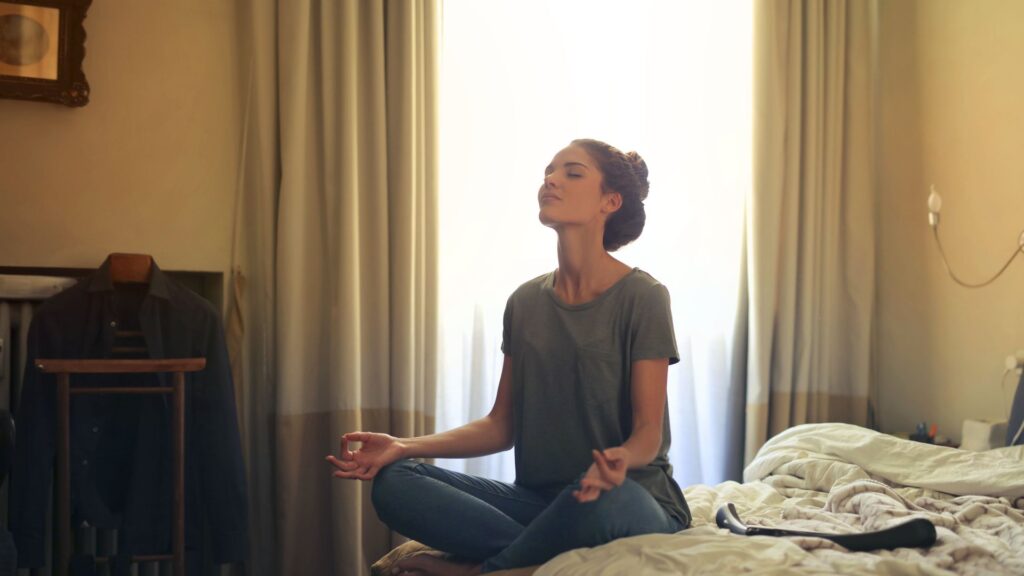
That slow, calm, nose-first rhythm can feel good, and feeling calmer at bedtime is a fair reason to keep going. It just isn’t the same thing as proof that it quiets a snore.
A Small Experiment You Can Run Tonight
Start with the Control Pause, the practice’s basic yardstick. It takes about a minute and costs nothing.
- Sit tall in a chair and breathe quietly for a couple of minutes
- After a normal, relaxed exhale, pinch your nose shut
- Count the seconds until you feel the first clear urge to breathe
- Let go and breathe in through your nose, calmly, without gasping
- Write the number down and repeat it each morning
If you reach for a big gulp of air afterward, you held on too long. If you live with asthma or any heart or lung problem, get your doctor’s okay first.
What the Studies Actually Found
Here’s the honest scorecard. Cochrane pooled the trials on breathing exercises in adults with asthma in 2020 and saw hints of better quality of life and lung function, though the certainty ran from moderate down to very low.
Back in 2015, Australia’s health department put 17 alternative therapies under the microscope, and Buteyko didn’t come out with clear proof (the overview page summarizes it). Sleep apnea research is thin, and we couldn’t find a trial that measured snoring.
Three Ground Rules for Nose Breathing
- Keep your lips gently closed while you rest, read, or watch television
- Breathe low and quiet, without sighing or big gulps
- If your nose stays blocked, get it checked, because chronic congestion and a deviated septum can both feed snoring
Those rules cost nothing and carry little risk. Treat them as a trial, and see what your nights say.
Where Your Snore Really Comes From
Mayo Clinic points to the shape of your mouth and throat, alcohol before bed, a stuffy nose, too little sleep, and lying on your back.
None of those lines up neatly with how much air you breathe. A blocked nose is the one clear overlap, because it pushes you toward your mouth.
Better Bets While You Experiment
Throat and tongue exercises have more data. In a 2015 meta-analysis of nine adult studies, snoring ate roughly 14 percent of the night before training and under 4 percent after.

Our guide to 15 easy oropharyngeal exercises shows you where to start. Our roundup of natural remedies to help you stop snoring covers the rest of the toolbox.
When a Snore Is Really a Warning
Gasping, choking, pauses someone else notices, or exhaustion all day long are not breathing-practice problems. They point toward sleep apnea.
Read how snoring and sleep apnoea are related, then check the warning signs of sleep apnea and book a sleep study.
Your Next Quiet Chapter
Treat Buteyko as a short experiment, not a verdict on your body. Track your Control Pause and your nights for a few weeks, and keep whatever the numbers support.
If the snoring stays loud, you haven’t failed. You’ve just crossed one idea off the list.