Which Anti-Snore Pillow Is Best? Our Ranked Shortlist
If you want one pillow to try first, make it the Nora Gen 2. If you want the cheapest honest experiment, take the Nitetronic Z10.
I ranked four options by the evidence behind them, the price, and how easy it is to return them. A shorter list beats a long one when most pillows have never been tested on snorers.
What the Studies Say Before You Shop
The research on snoring pillows is small but real. A crossover study of 22 snorers tested a pillow that shifts the head, and the sleep-lab snoring score came out lower (p = 0.03).
A pilot of 30 patients with a smart pillow showed gains for mild-to-moderate apnea and none for severe cases. A 2024 review of positional devices called for head-to-head tests.
Plain pillows fare worse. A trial of 40 snorers from 2004 found a simple head-positioning pillow no better than the alternatives.
1. Nora Gen 2: Best Overall
Nora doesn’t replace your pillow. A small pebble on your nightstand listens, and a floor pump inflates an insert under your own pillow to turn your head.
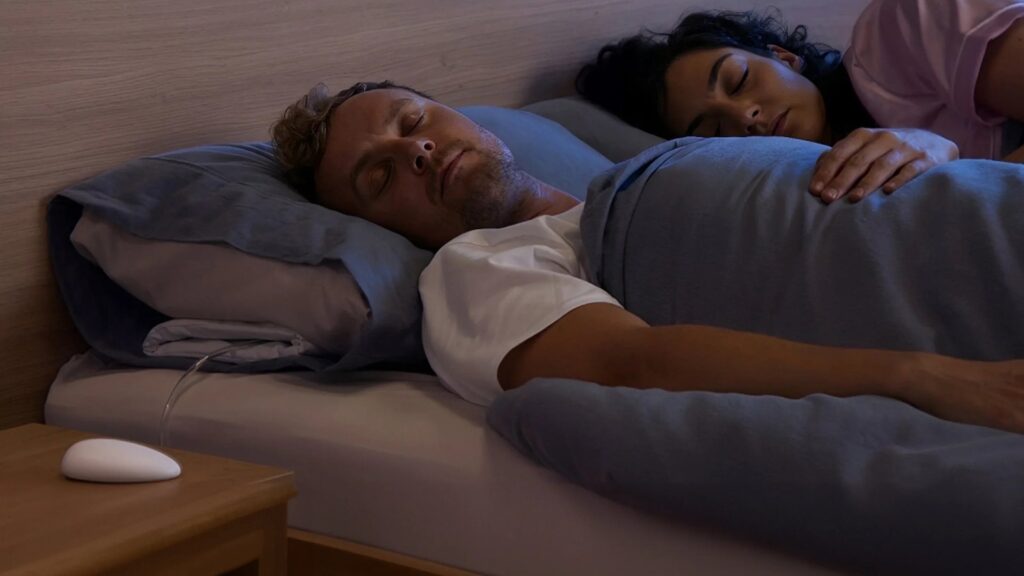
Smart Nora lists the Gen 2 at $439, marked down from $499, as of October 2026. The page offers a 30-night trial, free shipping and returns, and a one-year limited warranty.
The company points to a validation study run by SleepScore Labs with 58 participants over 527 nights. Snorers reported 20% more ability to sleep through the night, and partners reported 31%.
That study wrapped up in September 2018, and the company paid for it. The home page also advertises a 79% drop in loud snoring, a figure I didn’t find on the study page.
The listing bundles a first month of the Nora+ membership, then $5.99 a month. Perks include firmware updates and continuous warranty coverage.
Who it fits: snorers who sleep on their backs or stomachs and want to leave their own pillow alone. Our earlier look at a smart pillow that stops snoring covers the idea.
2. Nitetronic Z6: Best Built-In Option
Nitetronic builds the sensors and air chambers into the pillow itself. On the company’s own site, the Z6 costs about $549 in October 2026, marked down from $699.

Nitetronic describes six air chambers and an app that logs snoring. I couldn’t locate any trial of the Z6 itself, so the support is the general pillow research above.
Who it fits: people who want one object on the bed, not a pebble and a pump.
3. Nitetronic Z10: Best Budget Test
The Z10 runs about $99 right now, marked down from $139. It has no motor and no app, just a shaped pillow that coaxes you toward your side.
Nitetronic says to give any new pillow a week or two before you decide. That’s fair advice for a $99 gamble.
Who it fits: side-curious sleepers who aren’t ready to spend hundreds.
4. A Wedge Pillow: Best No-Tech Choice
A foam wedge lifts your upper body. The best data point is a trial of 52 sleep apnea patients where a 7.5 degree head-end tilt eased breathing interruptions.
That’s apnea research and not snoring research, so keep your hopes modest. Brands like InteVision hold 4.2 stars from roughly 10,800 Amazon ratings, but ratings aren’t evidence.
Who it fits: reflux sufferers and back sleepers who want height more than gadgets.
What We Dropped From the Old List
This page once ranked seven pillows. We removed the Level Sleep Restore because its old product page now lands on Nectar’s site, and we couldn’t confirm its quoted clinical numbers.
The Goodnite is gone too, since it’s absent from Nitetronic’s current catalog. We also cut the copper-pillow claims, along with the Purple, Layla, Eight Sleep and iSense picks, because we couldn’t confirm snoring-specific claims for them in this refresh.
When to See a Doctor Instead
Gasping, choking, or exhausted afternoons mean a sleep test comes first. The smart-pillow pilot I cited saw no gain in severe apnea.
Mild, simple snoring is fair game for a pillow. Pair it with the habits in our home remedies roundup.
Pick Your Trial Run
Choose one pillow, note the return window, and keep a snore log for two weeks. If your partner still hears the same noise, send it back.
Not sure about sleeping without one? Our post on skipping the pillow is a fun side read.
Our MyPillow or Casper comparison covers the comfort brands.