You know the sound. It starts a few minutes after the lights go out, and by midnight you’re staring at the ceiling and doing sleep math.
Here’s a calmer way to handle it. Test one change at a time, keep notes, and see what your partner hears.
Key Takeaways
- Start with the cheap tests. Alcohol timing and sleeping position cost nothing, and both have research behind them.
- Ask your partner to judge. In a trial of 42 couples, the partner decided whether snoring had improved.
- Know the red flags. Gasping, witnessed pauses, or heavy daytime sleepiness need a doctor, not another gadget.
How Common Is Snoring Without Sleep Apnea?
Very. A 2024 trial in JAMA Otolaryngology opens by noting that approximately 150 million people in the US snore without having obstructive sleep apnea.
That’s good news in one way. Plain snoring is common, and it’s worth testing simple fixes before you spend money.
Does Tonight’s Drink Change Tomorrow’s Sound?
It might. A meta-analysis of 14 trials with 422 people found that breathing disruptions rose after alcohol, and the rise was larger in snorers than in the overall group.
A separate review of 13 studies with 279 patients linked alcohol to worse snoring severity. Try a few nights with no alcohol near bedtime and let your partner tell you what changed.
Can a Pillow Quiet the Room?
Maybe, for some people. In a small study of 25 adults with positional sleep apnea, a head-positioning pillow cut the snoring index from a median of 218 events an hour to 115 over three nights.
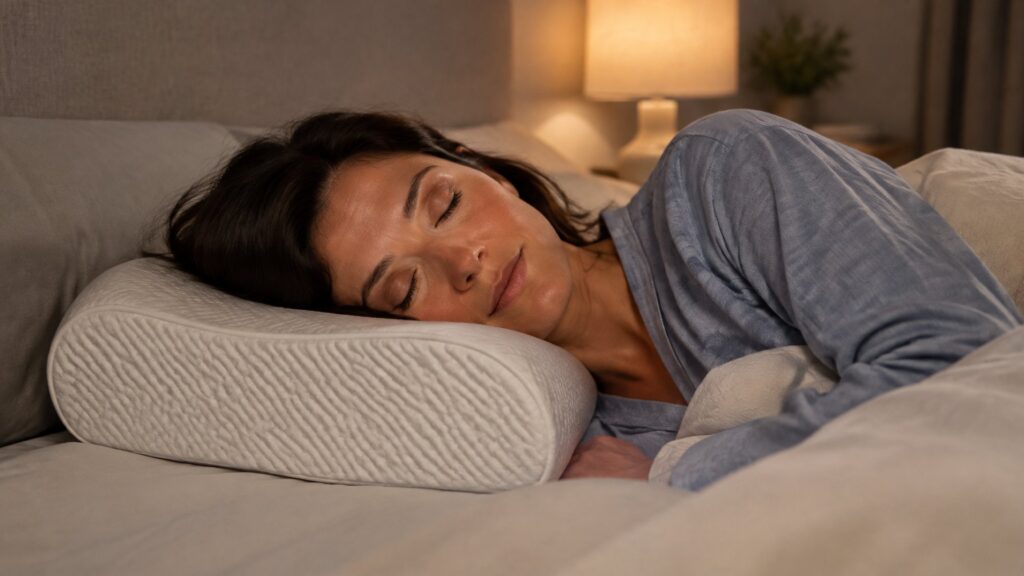
That group had a specific kind of apnea, and the study was short, so treat it as a reason to experiment. Our post on tape over the lips and what a snoring partner should know covers another popular bedtime trick.
What Do Partners Say Works Better?
A pilot trial of 50 couples compared a mandibular advancement device with a combined routine of a nasal dilator, saline rinse with mometasone, mouth taping, and side sleeping. Forty-two couples finished.
Partners rated 21 of 23 snorers (91%) as much or very much improved with the device, compared with 11 of 19 (58%) in the combined group. Four people dropped out for side effects, split evenly between the groups.
It was a four-week pilot, so it doesn’t settle the question. It does show why fit and a dentist’s opinion matter before you buy a mouthpiece.
Is Your Nose Part of the Problem?
Sometimes the easiest test is the nose. Our straight answer on nasal strips for snoring walks through who they’re for.
If the stuffiness arrives with spring or fall, read how seasonal allergies affect your nights.
When Is It More Than Snoring?
Snoring plus gasping, choking, witnessed pauses, or heavy daytime sleepiness is a reason to see a doctor. A sleep test can sort out what’s going on.
Our guide on what to do when your partner wakes up gasping explains what to notice. And if the talk itself feels hard, try how to discuss chronic snoring with your partner.
Frequently Asked Questions
Your Next Step: Run a Two-Week Quiet Night Test
Change one thing at a time, and ask your partner to rate each night. Keep a simple note, and bring it to your doctor if the noise sticks around.